
Romani in UK Advisors
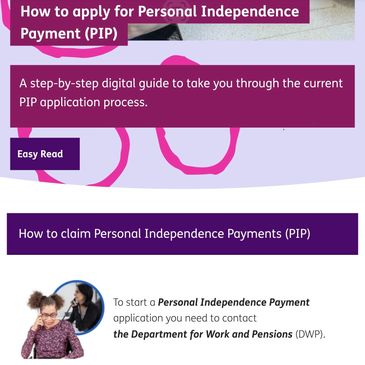
PIP
PIP
PIP
Start your claim by phone
You need to:
- Call the ‘PIP new claims’ phone line and answer some basic questions about you and your disability or condition. You’ll be sent a form that asks about how your disability or condition affects you.
- Complete and return the form. The address is on the form.
- You might need to have an assessment, if more info
Start your claim by phone
You need to:
- Call the ‘PIP new claims’ phone line and answer some basic questions about you and your disability or condition. You’ll be sent a form that asks about how your disability or condition affects you.
- Complete and return the form. The address is on the form.
- You might need to have an assessment, if more information is needed.
How the PIP Assessment works
PIP is divided into two components, the Daily Living component and the Mobility component. The number of points you score decides whether you get an award of either component or both and at what rate.
Daily living activities
The decision about whether you are entitled to the daily living component and, if so, at what rate, is based on the number of points you score in total for the following activities:
- Preparing food
- Taking nutrition
- Managing therapy or monitoring a health condition
- Washing and bathing
- Managing toilet needs or incontinence
- Dressing and undressing
- Communicating verbally
- Reading and understanding signs, symbols and words
- Engaging with other people face-to-face
- Making budgeting decisions
Each of these activities is divided into a number of point scoring descriptors. To get an award of the daily living component, you need to score:
- 8 points for the standard rate
- 12 points for the enhanced rate
You can only score one set of points from each activity, if two or more apply from the same activity only the highest will count. So, for example, if:
- 4d. Needs assistance to be able to wash either their hair or body below the waist. 2 points
- 4f. Needs assistance to be able to wash their body between the shoulders and waist. 4 points
both apply, you will receive only the 4 points for the ‘between the shoulders and waist’ activity. These can then be added to points for other activities, such as 'Dressing and undressing'

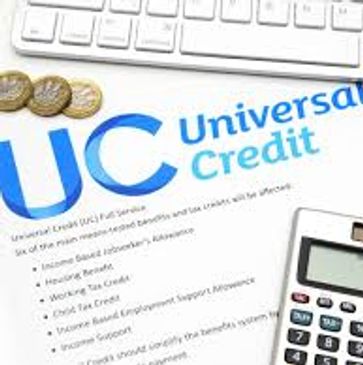
UC
PIP
PIP
How to apply for Universal Credit
You'll usually have to apply for Universal Credit online. The first thing you need to do is set up an online account - you'll use this to apply and manage your claim. You might be able to apply by phone in special circumstances.
Then you’ll need to complete 4 more steps before you can get Universal Credit.
How to apply for Universal Credit
You'll usually have to apply for Universal Credit online. The first thing you need to do is set up an online account - you'll use this to apply and manage your claim. You might be able to apply by phone in special circumstances.
Then you’ll need to complete 4 more steps before you can get Universal Credit. You’ll need to:
- answer questions about your situation - this is called your ‘to-do list’
- confirm your identity - you can do this online or in person
- book an appointment with your work coach - you’ll meet them regularly as part of your Universal Credit claim
- speak to your work coach at the Jobcentre or on the phone - they'll check your details and agree what tasks you'll do regularly to get Universal Credit
Make sure you complete all of these steps - you’ll need to do them all before you can get your Universal Credit payment.
Before you complete your ‘to-do list’
In your account, you’ll be asked questions about your situation, any income you get and your housing costs. This is so the Department of Work and Pensions (DWP) can decide how much Universal Credit you should get.
It’s best to gather any details or documents about these things in advance - this will make it faster to answer all the questions.
Gather details of your:
- rent and housing situation - it’s best to have your rental agreement with you, if you have one
- income and savings
- childcare provider, if you have one - for example, their registration number and contact details
- bank account - like your sort code, the last 4 digits of your account number and how much money is in each account.
Completing your ‘to-do list’
When you log in, you’ll see a ‘to-do list’ with different questions you need to answer. You’ll need to answer them all before you can submit your claim.
It’s best to finish your to-do list as soon as you can - if you don’t, it might delay your first Universal Credit payment. You don’t have to complete the whole application in one sitting.
You’ll be signed out of your account if you don’t do anything for 30 minutes. The account will remember any details you’ve saved so far - it might not remember any details you haven’t submitted or saved yet.
If you're making a claim with your partner, you might not be able to answer some of the questions until your accounts are linked.
Answering questions
You’ll have different sections in your to-do list with questions on your:
- nationality
- housing situation and who lives with you
- work situation
- income and any savings you have
- education and training
- health
- children and anyone you care for
- bank account
Make sure all the names and numbers are correct. When you enter details about any money you pay, you’ll need to write down how many pennies you paid - for example if your rent is £750, write down ‘£750.00’.
If you’re not sure of something, check any documents or emails you have.
Once you’ve completed all the questions in a section, you can’t edit your answers until you’ve finished all of the other sections
If you put in the wrong details, you might be paid the wrong amount or there might be a delay to your payment. If you’re paid too much, you’ll have to pay it back.
Your housing situation
You’ll be asked for details of:
- your address and when you moved there
- your living situation and if you rent your home - for example, from a private landlord, the council or a housing association
- how much rent you pay and any service charges - these are called ‘your housing costs’
- how many bedrooms you have - make sure this is the same as the number on your rental agreement
- who’s on the rental agreement and how much you all pay - if it’s a joint agreement
- your landlord’s address and phone number if you rent
It’s best to check your rental agreement if you’re not sure about any details. Your rental agreement might be called a 'tenancy agreement', 'licence agreement' or 'written statement of your occupation contract'. If you don’t have one, look for any documents or emails that confirm details about your rental - for example, a rent statement.
If you rent from the council or a housing association, you can also contact their customer service department. They’ll be able to tell you details of your rent and housing situation.
Your ‘housing costs’ and living situation
You’ll need to mention any ‘housing costs’ you pay - this includes any rent or ‘service charges’.
‘Service charges’ are any money you pay for maintenance work in shared spaces around your home or garden. For example if you live in a flat block with shared corridors, you might pay for someone to clean these. Check your rental agreement to find out if you pay service charges.
If you get any help with your rent, you’ll need to put down how much your total rent is - this includes any money you get to help with your rent. For example if you get £200 of Housing Benefit a month and you pay £400 rent a month, you’ll need to put down your total rent as £600.
You’ll also need to mention if you have any rent-free weeks. You might get rent-free weeks if you rent from the council or a housing association.
You’ll be asked if anyone else is named on the rental agreement. If they are, you’ll need to know how much your total rent is - this is the combined rent you pay for the home.
Your landlord’s details
You’ll be asked for your landlord’s details. If you rent from the council or a housing association, these might appear automatically.
You don’t have to put in your landlord’s email address if you put in their address and phone number.
If you’re not sure of your landlord’s details, write 'Care of' and put in your own address. You should update this as soon as possible - if you don’t update it, you could end up having to pay some money as a penalty.
The DWP might contact your landlord to confirm what you’ve told them. If you have a private landlord, the DWP will ask your permission before contacting them.
Council tax
You’ll be asked if:
- your name is on the Council Tax bill
- you’ve applied for Council Tax Reduction
If you mention that you already get Council Tax Reduction or you’re planning to apply, the DWP can let your council know that you’re applying for Universal Credit.
Your health
You’ll be asked if you have a ‘disability, illness or ongoing health condition’ that makes it difficult for you to work, or look for work. You should include both physical and mental health conditions, like depression or anxiety.
You’ll also be asked:
- when you last worked, if you don’t work anymore - ask a family member or friend if you’re not sure
- if you’ve been in hospital recently or you’re having medical treatment
You might have to get a fit note from a healthcare professional who's treating you.
When you need a fit note
You need to provide a fit note if:
- you’re ill for more than 7 days
- you have a long-term health condition
If you can't get a fit note that confirms your condition, you’ll need to remove the condition from your Universal Credit account.
Getting a fit note
You can get a fit note from the following healthcare professionals:
- your GP or a doctor at a hospital
- a registered nurse
- a pharmacist
- an occupational therapist
- a physiotherapist
Your fit note will be either printed or digital. If you’re not sure which kind you’ll get and how you’ll get it, check with the healthcare professional.
If you get a printed fit note, check that the healthcare professional has signed it.
If you get a digital fit note, check that it includes the healthcare professional’s name.
If the healthcare professional hasn't either signed your fit note or included their name, it could be rejected by the DWP and you might have to get a new one.
Your fit note is free if you’ve been ill for more than 7 days when you ask for it. You might have to pay for it if you’ve been ill for 7 days or less.
You should always keep your fit note - you might have to pay for a replacement if you lose or delete it.
You can:
- give the DWP a copy - either printed or digital
- upload it to the ‘To do list’ section of your online account
You should also take your fit note with you when you meet your work coach for the first time. If you have a digital fit note you can show it to them on your phone or another device.
You’ll need to give DWP a copy of your fit note. You might need to upload it to your journal - ask your work coach if you’re not sure how to do this.
If you’re struggling to make an appointment with your GP or another health professional, tell your work coach when you speak to them for the first time. They might agree you don’t need to work or look for work until you've had an appointment.
If you can’t get a fit note
Include as much as evidence as you can in your application. You could include:
- a hospital letter
- letters from specialists
- an occupational therapist’s care plan
- a list from your GP of any medication you’re on
Your work, income and savings
You’ll be asked if you work and if you’re self-employed. You’ll be asked extra questions about your work situation when you have your first appointment with your work coach.
Your income and earnings
Write down if you have any income. This includes money you’re getting from:
- work
- a pension
- other benefits
- an insurance plan
You do need to include any pay you get from your employer for any leave you’ve taken or are taking - for example:
- sick pay
- holiday pay
- maternity pay
Check your bank statements or contact your employer to find out how much you get.
Your savings and investments
Your ‘capital’ will be assessed. Capital includes any savings and investments you have. You’ll be asked about any savings and investments you have - for example, any shares you have or if you own a property you don’t live in. This could also include any large one-off payments you’ve received, like redundancy pay.
Your childcare costs
You can claim up to 85% of your childcare costs if you:
- are working
- have worked in the last two months
- are going to start working in the next two months
You can only claim childcare costs that you’ve already paid - you won’t get any money for future costs.
Your childcare provider
You’ll need to mention details of your provider and costs. This should include:
- their address and phone number
- their registration number
- how much you paid and when
- which dates the payments cover
- which child or children this provider looks after
You’ll need to provide evidence such as receipts or invoices from your childcare provider. This evidence must say ‘paid’ and be on headed paper - this is paper that has the person or organisation’s name at the top.
You can upload evidence of how much you’ve paid into your account. This can be a photo, scan or screenshot of your paid invoice. You can also take it to your Jobcentre appointment.
If you don’t give proof then you won’t get any money towards your childcare costs.
Contact your childcare provider if you need any documents.
After you complete your 'to-do list'
You’ll need to agree that all the information you’ve given is correct - you’ll need to tick ‘yes’ for each different section. This is all part of your ‘declaration’. If you tick ‘no’, you’ll be able to update the information before you submit your claim.
Check through what you’ve written and make sure all the details are correct.
If your situation changes, you should update the information on your account as soon as you can. Your Universal Credit might be stopped or reduced if your details aren’t correct.
You might need to answer extra questions after you’ve submitted your claim - depending on your situation. For example if you have a health condition and you haven’t got a fit note from your doctor yet, you’ll need to put in the details once you have it.
Confirming your identity
You’ll need to confirm who you are using the government's online system.
You can only use it if you have certain kinds of identification - like a UK passport or a valid UK driving licence or provisional licence.
If it doesn’t work, you can confirm your identity in person at the Jobcentre or on the phone.
Next steps
You still need to complete a few more steps before you’ve finished your claim.
You need to:
- book your appointment with your work coach
- complete any new tasks in your ‘to-do list’ - you’ll need to do these before you go the Jobcentre
- go to your interview at the Jobcentre
When you've finished your application, you need to have an interview with your work coach - either at the Jobcentre or over the phone. You’ll need to gather evidence and answer a few questions at your interview, so it’s best to prepare.
It will usually take 5 weeks to get your first Universal Credit payment, but you can ask to have some money paid sooner.
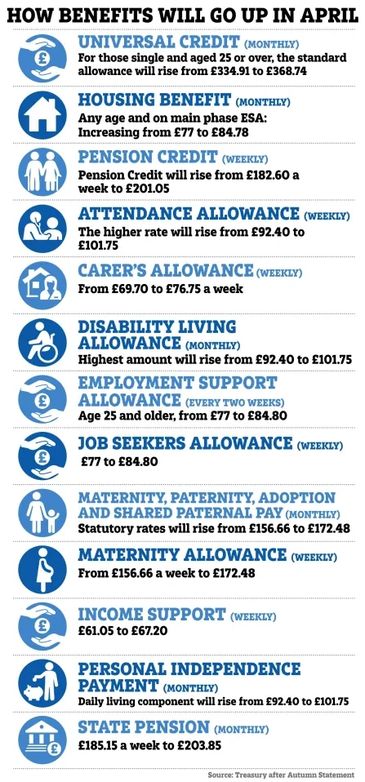
BENEFITS
Check if you can get Universal Credit
Universal Credit is the main benefit for most people of working age. You should check if you can get Universal Credit if:
- you’re over 18 and under State Pension age .
- you have less than £16,000 in savings or other investments
It's worth checking if you can get Universal Credit, even if you work full-time.
Check if you can get Universal Credit
Universal Credit is the main benefit for most people of working age. You should check if you can get Universal Credit if:
- you’re over 18 and under State Pension age .
- you have less than £16,000 in savings or other investments
It's worth checking if you can get Universal Credit, even if you work full-time. There’s no set amount of income where you stop being eligible for Universal Credit - it depends on your situation.
Getting Universal Credit if you’re sick or disabled
If you find it difficult to work because you’re sick or disabled, you might get more Universal Credit or not have to look for work.
Check what other benefits you might get
You might be entitled to other benefits depending on your situation - like your age, if you’re disabled or if you have a child.
You might be able to get more than one benefit - for example, disability benefits and Universal Credit.
If you’re sick or disabled
You might be able to get disability benefits if:
- you have difficulty with everyday tasks or getting around
- you can’t work because you’re sick or disabled
It usually doesn’t matter how much you earn, if you have savings or how much National Insurance you’ve paid.
If you’re over State Pension age
If you’ve been paying National Insurance contributions, you might get a State Pension.
If you’re sick or disabled
You might be able to get Attendance Allowance if you have difficulty with everyday tasks and getting around.
If you have a low amount of income and savings
You might be able to get Pension Credit - even if you own your own home or have a small private pension.
Claiming Pension Credit can give you access to other help like money off council tax, healthcare and energy.
If you’re 80 or over
If you don’t get a basic State Pension or your basic State Pension is less than £85 a week, you could get extra money - this is called a ‘category D pension’.
You can only get a category D pension if you’ve lived in the UK for at least 10 years of the past 20 years.
If you’re looking for full-time work
You might get ‘new style’ Jobseeker’s Allowance (JSA) if:
- you’re over 18 and under State Pension age
- you've worked and paid Class 1 National Insurance in the last 2 to 3 years
You can claim new style JSA on its own or with Universal Credit.
If you're a carer
If you care for a disabled person for at least 35 hours a week,
If you can’t get Carer’s Allowance
You might be able to get Carer’s Credit if you care for a disabled person for at least 20 hours a week.
If you're responsible for a child
You might get Child Benefit if you’re responsible for:
- a child under 16
- a child under 20 who is still in education or training
It doesn’t matter if you work or have savings and investments.
If you’re responsible for a child whose parents have died
You might get Guardian’s Allowance if you already get Child Benefit.
If you're 16 or 17
If you’re finding things difficult, you should contact your local council’s child services. They might be able to give you money to afford essentials and give you access to counselling and care.
You might also be able to get Universal Credit if:
- you’re a carer
- you’re a single parent or you’re the only person responsible for children in your household
- you can’t work or have difficulty working because you’re sick or disabled
- you’re not in contact with your parents and you’re not in care
If you’re responsible for a child under 18, you might be able to get Child Benefit.
If your partner died recently
You might be able to get bereavement benefits, depending on when your partner died.
Check what other financial help you can get
If you don’t have enough money to live on, you might be able to get extra money from the government, your local council or a charity.
PIP&UC Changes
Proposed changes to benefits will be coming thick and fast from 2026 right through to possibly 2030. We've set out the most important changes, reviews and consultations below.
December 2025
Streeting mental health and neurodiversity overdiagnosis review begins
Wes Streeting’s Department of Health and Social Care has commissioned a review in
Proposed changes to benefits will be coming thick and fast from 2026 right through to possibly 2030. We've set out the most important changes, reviews and consultations below.
December 2025
Streeting mental health and neurodiversity overdiagnosis review begins
Wes Streeting’s Department of Health and Social Care has commissioned a review into whether mental health conditions, ADHD and autism are being overdiagnosed.
The results of the review will be fed into the Timms review (see below) and could influence whether that body recommends reducing PIP awards for these conditions.
January 2026
Milburn UC cuts for youth review, call for evidence
In November 2025 Alan Milburn was commissioned to write a report on young people and work, looking in particular at why so many young people are Not in Education, Employment or Training (NEET), including those claiming health and disability benefits.
The results of the report will influence whether Labour goes ahead with its green paper proposal to delay access to the UC health element until age 22, meaning that younger people will not be eligible.
The Milburn review has called for evidence from the public, in relation to two questions:
1. What is stopping more young people from participating in employment, education or training?
2. What would make the biggest difference to support more young people to participate?
February 2026
Timms PIP review begins work
The review will include consideration of,
- The role of the PIP assessment.
- The assessment criteria – including activities, descriptors and associated points. The review will consider both the Daily Living and Mobility elements of the PIP assessment.
- Whether any other evidence should be considered alongside the functional assessment to fairly reflect the impact of living with a long-term health condition or disability, including related to an individual’s personal circumstances and environment.
- How the PIP assessment could provide fair access to the right support at the right level across the benefits system.
- What role the assessment could and should play in unlocking wider support
It’s recommendations may relate to both current and future claimants.
April 2026
Universal credit changes
The UC Act, will introduce cuts to the UC health element for new claims, increases to the UC standard rate and the introduction of the severe conditions criteria as a means of deciding who gets the higher rate of the UC health element.
The UC standard allowance for new and existing claims will be increased, but from April 2026, the LCWRA element (which the Green Paper calls the health element) for existing claimants will be frozen. However, the freeze to the health element will not to apply to:
- existing claimants,
- people who meet the severe conditions criteria
- terminally ill patients.
For new claims from April 2026, the rate of the LCWRA element – now called the health element - will be reduced by £47pw, from £97pw in 2024/2025 to £50pw in 2026/2027.
People on the health element of UC will be expected, as a minimum, to participate in periodic conversations about work and support (with exceptions where this would not be appropriate). If someone does not attend or engage in a planned conversation, the DWP will seek to understand the reasons before benefits are affected. In other words, sanctions can be applied to people in this group. However, the green paper says that "as now, we do not envisage the requirement on this group extending to undertaking specific work related activity or to look for work or take jobs."
Benefits uprating 2026/27
Most benefits will increase by 3.8%, in line with the CPI rate of inflation.
Exceptions include the universal credit standard allowance, which is increasing by more than the CPI and the limited capability for work-related activity (LCWRA) rate for new claimants who do not meet the severe conditions criteria, where the rate is almost halving.
PIP reviews more WCA reassessments
The time between PIP reviews is to be extended for the majority of PIP claimants aged 25 and over, to a minimum of three years for a new claim, rising to 5 years at their next review if they remain entitled.
This will free up health professionals to begin tackling the backlog of WCA reassessments.
More face-to-face assessments for PIP and WCA
The proportion of face-to-face assessments is to be increased to 30% for both PIP and the WCA, rising from lows of 6% for PIP in 2024 and 13% for the WCA.
The move is likely to reduce the number of successful claims.
Local and devolved elections
The local and devolved elections aren’t about PIP or UC at all. But if Labour does as badly as expected, there will be pressure for change from both wings of the party. Those on the right will be pushing for more punitive welfare changes to attract Reform voters, whilst those on the left will be arguing for a more supportive stance on benefits to attract Green/LibDem/Your Party supporters.
So, claimants in areas where elections are being held have a real interest in not only voting, but also letting parties know if their stance on benefits has influenced their vote. We’ll be covering this in more detail in the near future.
June 2026
Streeting mental health and neurodiversity overdiagnosis review final report
We don’t have a definite date for when the Streeting review (see above) will report back, but it was set to last for 3-6 months from a start date in December 2025. So we should have the final report by June at the latest.
July 2026
Motability changes
VAT relief for top-up payments made to lease more expensive vehicles via Motability will be removed for new leases from July 2026, so VAT will be payable at 20% on top-ups.
Insurance Premium Tax will apply at the standard rate of 12% to insurance contracts on the Scheme.
Milburn UC cuts for youth review
will end in Summer 2026, with a full and final report being provided to the secretary of state for work and pensions.
November 2026
PIP review final report
We don’t have a definite date for the final report of the Timms review (see above). But it’s due in the Autumn, so we’re guessing that November is the most likely month. We’ll publish any firmer information that becomes available.
2026/27
Right To Try Guarantee
The Green Paper says that the government will establish in law the principle that work will not lead to a reassessment. Legislation will guarantee that trying work will not be considered a relevant change of circumstance that will trigger a PIP award review or WCA reassessment.
2027/28
Delaying access to the UC health element until age 22
One of the proposals in the Pathways to Work Green paper was to delay access to the UC health element until age 22, meaning that younger people would not be eligible. The claim is that this would make it less likely that young people would be trapped in a life on benefits.
Whether this goes ahead may, to some extent, depend on the findings of the Milburn review.
2028/29
Abolition of the WCA
The work capability assessment (WCA) is the current test which gives access to the limited capability for work-related activity (LCWRA) element – or health element - of universal credit.
According to the green paper, from 2028/29, the WCA is to be axed and eligibility for the UC health element will depend upon being in receipt of the daily living component of PIP.
There is currently no certainty about whether current LCWRA claimants who do not receive PIP daily living will be affected by the change.
In fact, at this stage there is no certainty that the WCA will be axed and also seem to have pushed the possible date back to 2030.
PIP/UC single assessment
At the same time as the WCA is abolished, the new PIP assessment that is created by the Timms review will be introduced, if it has not been introduced earlier. This single assessment will give access to both PIP and the health element of UC.
But, as we explained above, there is now some uncertainty about when or whether the WCA will be abolished.
New Unemployment Insurance contributory benefit
The Green Paper gave sketchy details of a proposal to replace New Style Employment and Support Allowance (NS ESA) and New Style Jobseeker’s Allowance (NS JSA) with one new Unemployment Insurance benefit.
It will be paid at the ESA rate (currently £138pw) and will be time-limited.
People claiming Unemployment Insurance will be expected to actively seek work with ”easments” for those with work-limiting health conditions.
It is not clear how it will be decided if a claimant has a work-limiting health condition, as the WCA is being abolished.
After the, as yet unquantified, time-limit on Unemployment Insurance has expired, claimants will have to attempt to claim UC.